
It Is Manageable, We Promise
Fear of pain is one of the biggest barriers to booking surgery. While a tummy tuck (abdominoplasty) is a major surgery involving muscle repair and skin removal, modern pain management protocols make it much more tolerable than in the past. Understanding the phases of discomfort and having a plan can significantly reduce your anxiety.
The Exparel Shot: A Game Changer
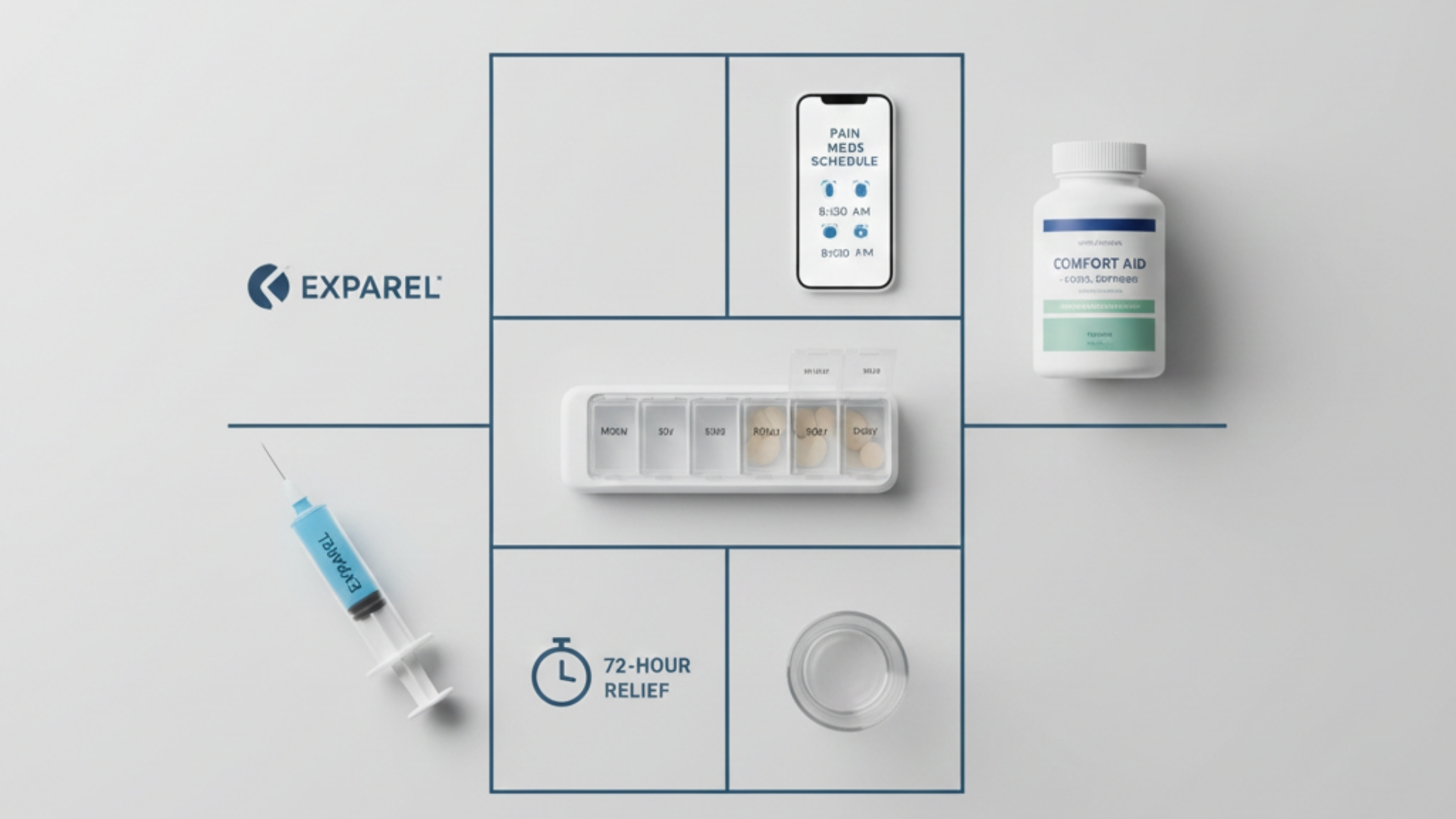
Ask your surgeon about Exparel. This long-lasting local anesthetic numbs the surgical site for up to 72 hours. This "bridge" covers the most acute phase, allowing many patients to transition to Tylenol much sooner.
Medication Schedule: Stay Ahead
The golden rule of post-op pain control is: Do not play catch-up.
Take your pain medication exactly as prescribed, on a schedule. Set an alarm, even for the middle of the night. If you wait until you feel pain, it takes much longer to control.
You can likely start stretching the doses or switching to a non-narcotic option if you are comfortable.
Narcotics cause constipation, which is painful with muscle repair. Start taking stool softeners (e.g., Colace) the day before surgery.

Natural Pain Relief Strategies
Medication isn't the only tool in your kit. Combined with our Week-by-Week Recovery Guide, these strategies help immensely.
Positioning (Crucial!)
Keep your waist bent (beach chair position) to relieve tension. Sleeping flat pulls on the repair and causes pain. Use a recliner or wedge pillows.
Ice Packs
Check with your surgeon, but ice on the flanks (not the numb tummy skin) can reduce swelling and discomfort.
Distraction
Pain is processed in the brain. Audiobooks and movies are excellent for taking your mind off physical sensations.
Arnica Montana
Some surgeons recommend this homeopathic remedy to reduce bruising and swelling, which contributes to pain.
Nerve Regeneration Zings
Around weeks 2-4, you might feel sudden, sharp "zaps" or burning sensations. This is actually a good sign! It means the nerves that were disrupted during surgery are waking up and reconnecting. It can be startling, but it is normal and temporary.
When Pain Indicates a Problem
While discomfort is normal, severe pain is not. Call your surgeon if:
- You have pain in your calf or leg (could be a clot).
- One spot on your tummy is significantly more painful, red, or hot than the rest.
- Your pain medication is not providing relief.